
17 Study Motivation Tips That Actually Work in 2026

Table of Contents
Introduction
Ever find yourself staring blankly at a textbook, motivation completely gone? I've done this more times than I care to count. Procrastination isn't some personal failing. It's normal.
Study motivation challenges hit everyone at some point.
Good news though: you can actually learn to stay motivated. I've gathered 17 research on study motivation study motivation tips that come from real science, not empty platitudes. Each one works independently, so grab what fits your needs. Your brain's got more flexibility than you realize.
Foundation Tips Everyone Misses (Tips #1-4)
Tip #1: Adopt a Growth Mindset (Your Brain Rewires Itself)
Most students miss this: your brain physically transforms when you learn. Research from Voss and colleagues proves neuroplasticity is real - your brain adapts throughout your entire life. That C+ you got last semester doesn't define your intelligence.
Mistakes aren't failures. They're literally how your brain builds new neural pathways. When I bombed my first college exam, I thought I was just bad at the subject. Turns out I was just learning. Growth mindset means viewing setbacks as data, not destiny. This shift alone transforms how you approach difficult material.
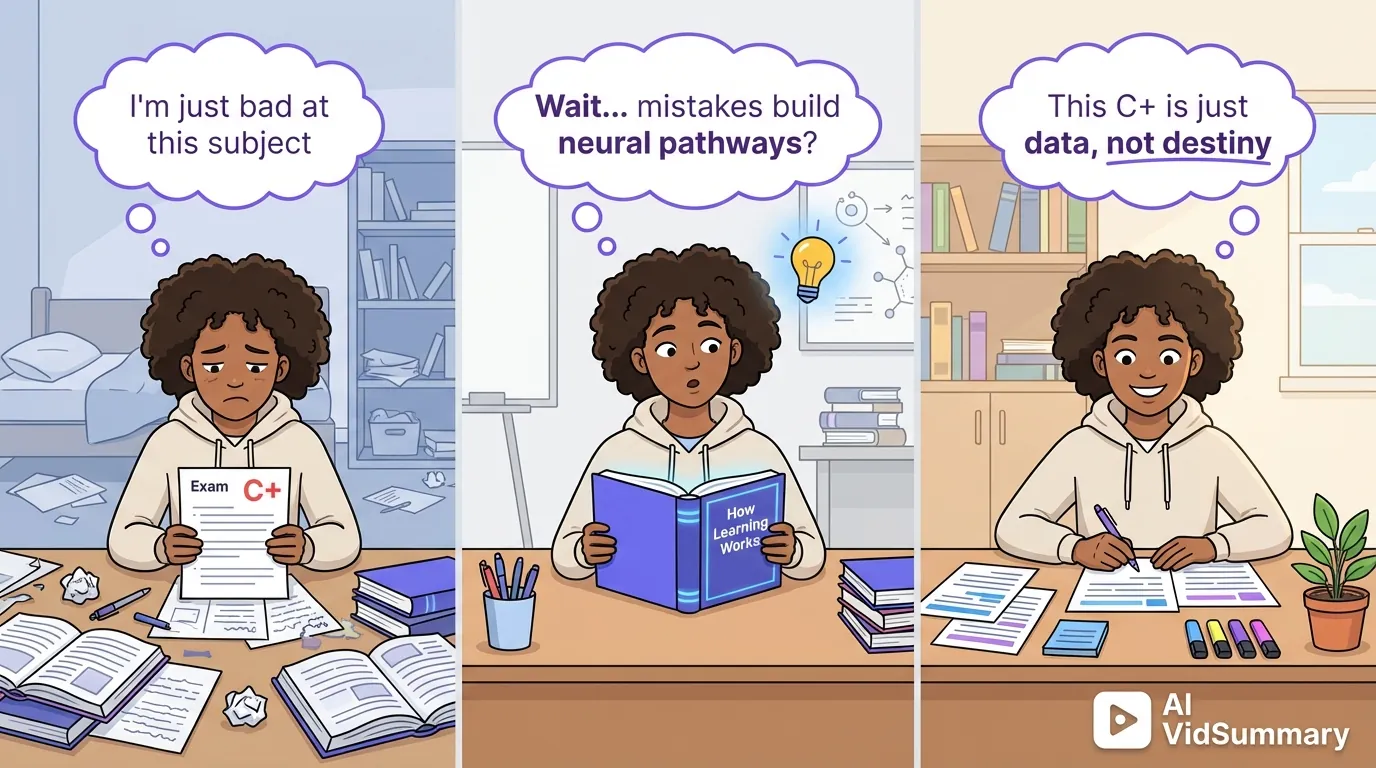
Your brain is a muscle that gets stronger with use.
Tip #2: Own Your Locus of Control
Julian Rotter figured this out in the 1950s: some people believe they control their outcomes, others blame external factors. Students with internal locus of control consistently outperform those who don't.
You can't control your professor's grading curve. You can control how many hours you study.
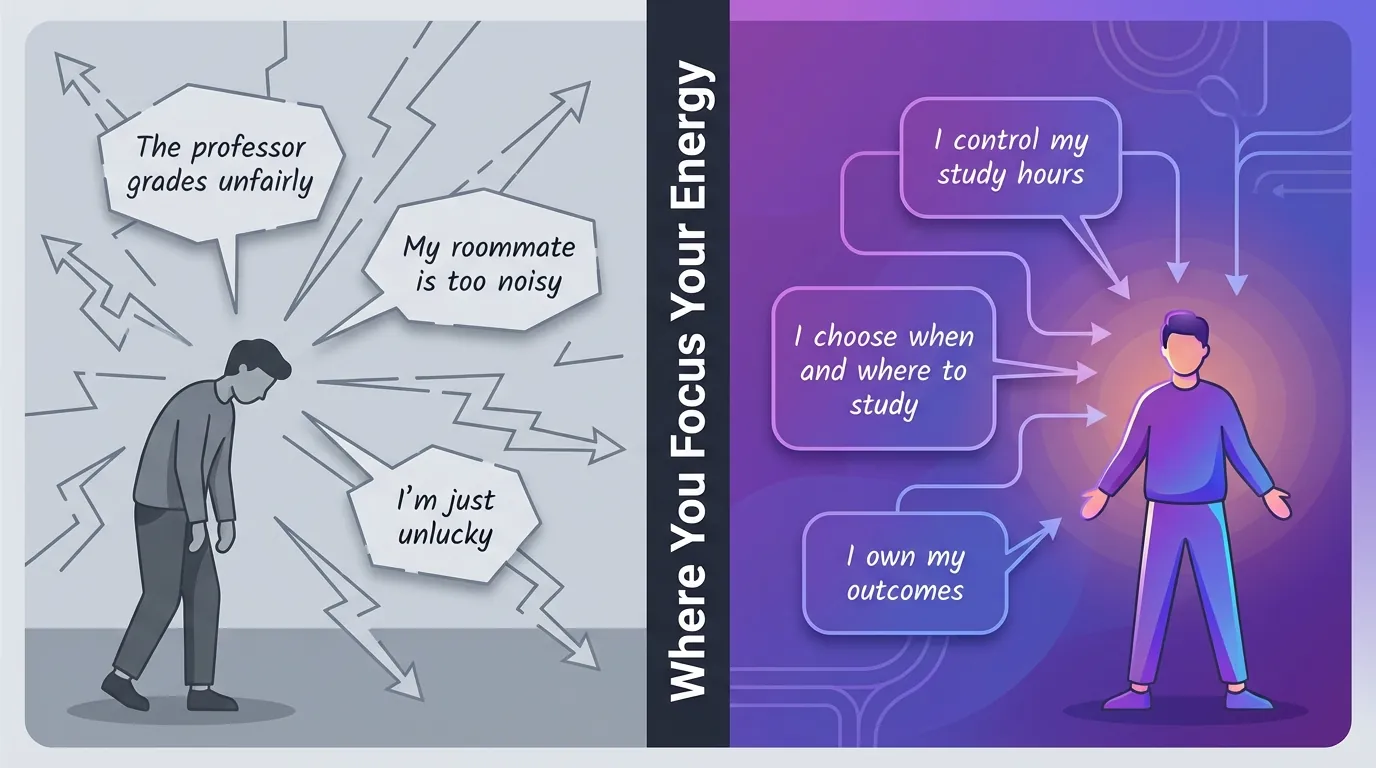
You can't control your roommate's noise level. You can control when and where you study. Focus your energy on what's actually in your power - it's surprisingly empowering.
Tip #3: Create a Distraction-Free Study Zone
Your environment shapes your motivation more than you realize. A cluttered desk creates mental clutter. Poor lighting drains your energy. An uncomfortable chair makes you want to quit early.
I've worked with hundreds of students through academic advising resources programs, and the ones who succeed create dedicated study spaces. Doesn't need to be fancy - just consistent, clean, and free from distractions. Your brain starts associating that space with focus. Leave your phone in another room. Close unnecessary browser tabs. Make it physically difficult to get distracted.
Tip #4: Turn Hour-Long Lectures Into 3-Minute Reads
Be honest: rewatching hour-long lecture videos kills motivation. You know you should review that chemistry tutorial, but ugh, an entire hour? This friction stops students from reviewing material they actually need. I've seen countless students fall behind simply because video content takes too long to consume.
Modern learning strategies emphasize efficiency over brute-force time investment. When you can extract the key points from a video in minutes instead of rewatching the whole thing, you're more likely to actually do it. Tools like AI-powered study tools allow students to summarize YouTube lectures instantly, making review sessions less painful. Reducing friction in your learning process directly boosts your willingness to study.
Goal-Setting Strategies That Actually Stick (Tips #5-7)
Tip #5: Break Long-Term Goals Into Weekly Wins
"Pass organic chemistry" feels overwhelming. "Master Chapter 3 by Friday" feels doable. Your brain craves clear, immediate targets to maintain motivation. Long-term goals are dreams. Weekly goals are deadlines.
Remember: goals are dreams with deadlines.
I recommend the effective study motivation techniques approach of reverse-engineering your semester. Start with your final exam date. Work backward to create weekly milestones. Each week becomes a mini-victory instead of just another week closer to doom. That massive goal transforms into a series of manageable steps, and you celebrate progress every seven days instead of waiting until finals week.
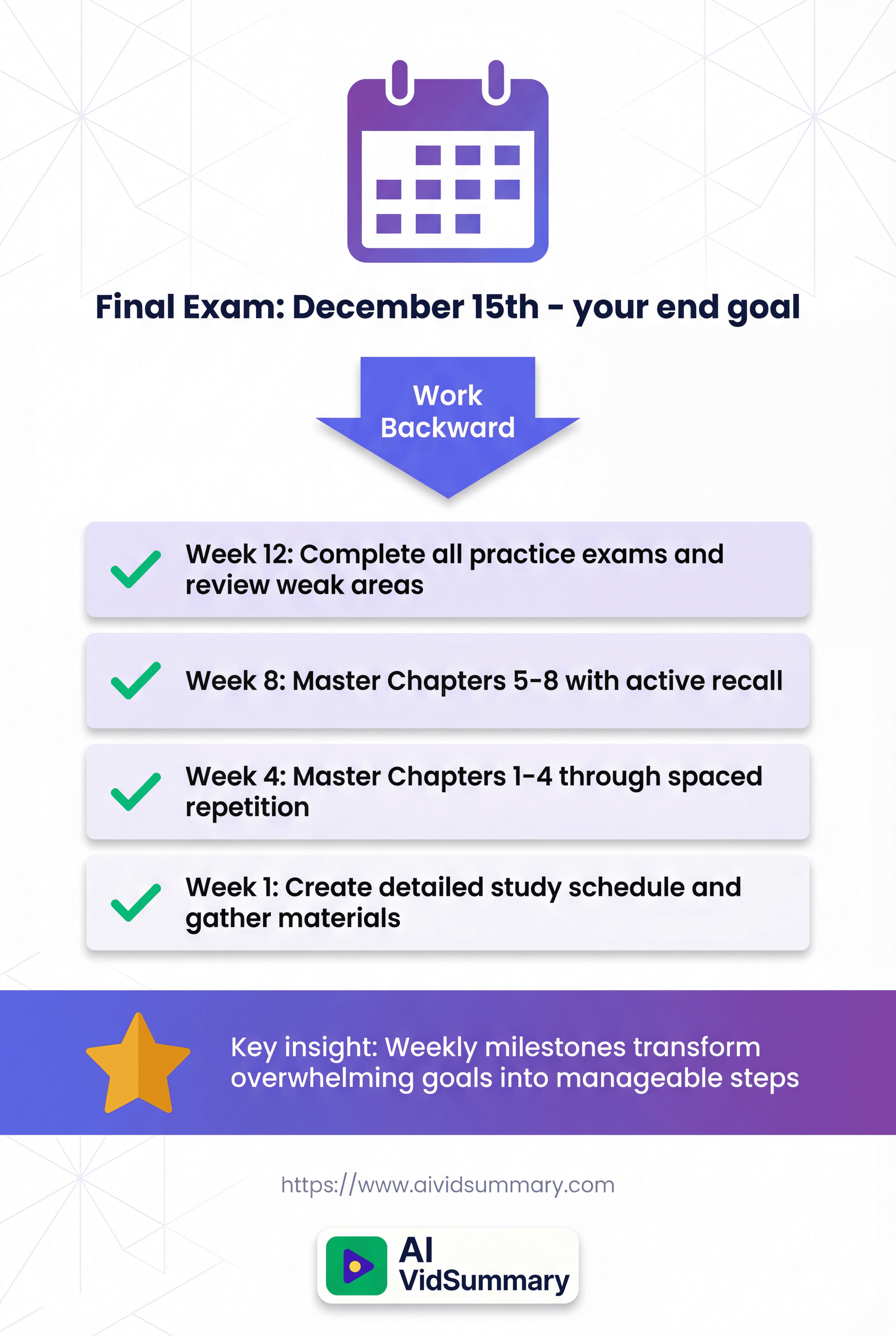
Immediate wins fuel long-term success.
Tip #6: Start Simple to Build Momentum
A secret: start with the easiest material first. Yeah, I know conventional wisdom says "eat the frog" and tackle hard stuff early. That works for some people. For most students struggling with motivation, starting simple builds confidence.
Knock out three easy practice problems before attempting the challenging one. Your brain gets a dopamine hit from those early wins, and that positive feeling carries you through the harder material. Beginning with easier information creates genuine accomplishment, not fake self-esteem.
Tip #7: Celebrate Small Victories Immediately
Finished reading one chapter? Take a five-minute break and do something you enjoy. Completed ten flashcards? Text a friend. Solved that difficult problem? Stand up and stretch.
Immediate rewards strengthen study habits better than delayed gratification. Your brain needs to associate studying with positive feelings, not just future benefits. I'm not saying binge Netflix after every paragraph. I'm saying acknowledge progress in real-time. Research from student success strategies shows that students who reward small achievements maintain motivation longer. Micro-rewards create macro-results.
Science-Backed Learning Techniques (Tips #8-11)
Tip #8: Use the Pomodoro Technique (25 Minutes of Pure Focus)
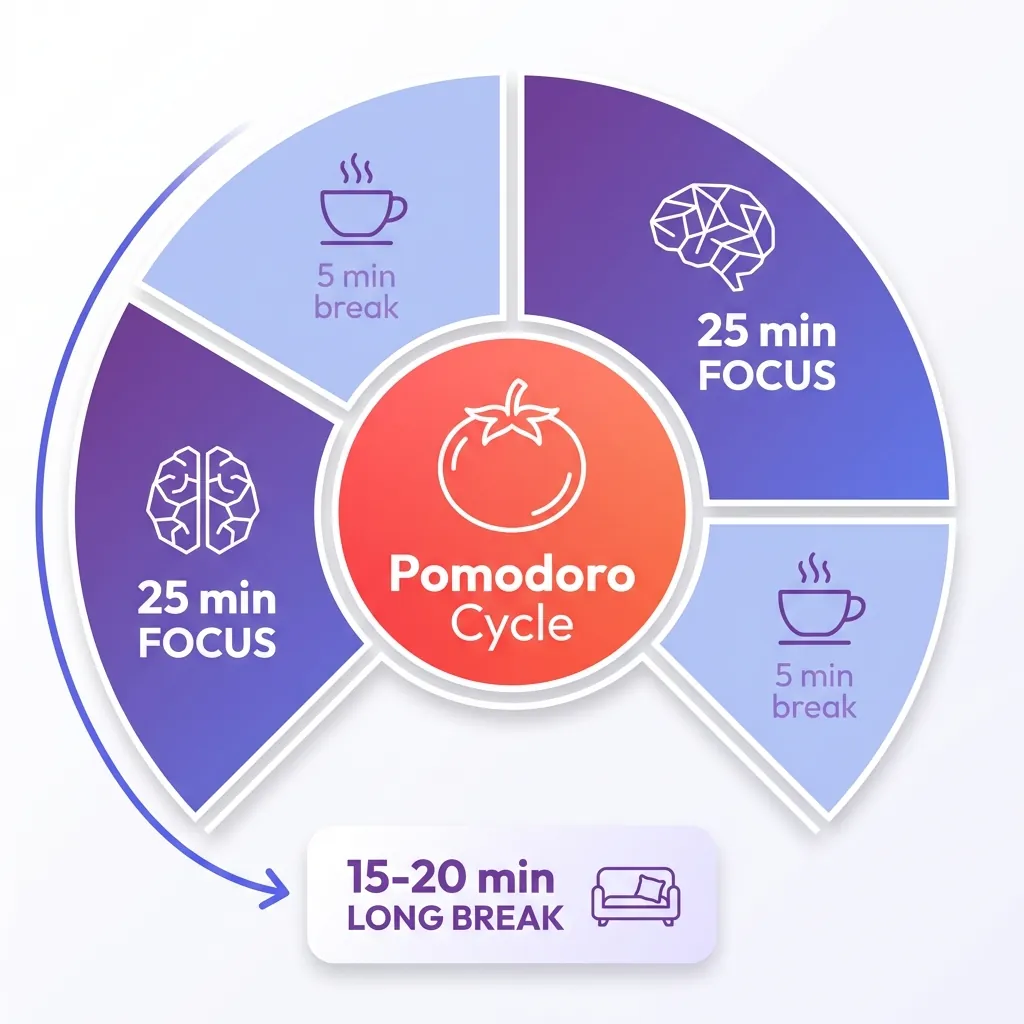
Francesco Cirillo created this method in the 1980s. Still works like magic. Dedicate 25 minutes** to complete focus. Break for 5 minutes.
The Pomodoro Technique research demonstrates this prevents mental fatigue while keeping concentration sharp. Medical and pharmacy students rely on this method when study sessions get intense. Your brain can push through nearly anything for 25 minutes. Complete four cycles, then grab a longer 15-20 minute break. The framework eliminates all guesswork about study duration.
This technique saved me during grad school.
Tip #9: Apply the Feynman Technique (Teach to Learn)
Richard Feynman won a Nobel Prize partly because of his learning approach. His method cuts straight to the point: explain the concept to someone with zero background knowledge. Can't explain it simply? You don't really understand it.
Try walking your business-major roommate through photosynthesis and watch what happens. The holes in your knowledge surface instantly. Teaching demands you arrange information in logical order. The Feynman Technique research confirms this strengthens retention dramatically. Record yourself talking through concepts aloud. Watch the Feynman learning method to see it in action.
You learn by teaching, not just by reading.
Tip #10: Replace Cramming With Mnemonics
A 2019 meta-study examined 214 research papers on learning techniques. The conclusion? Mnemonics beat cramming every single time. Learning in small chunks with memory devices builds lasting knowledge.
ROY G. BIV for rainbow colors. PEMDAS for order of operations. These stick because your brain grabs onto stories and patterns better than raw facts. Build acronyms, rhymes, or visual connections for complex material.
Tip #11: Stop Multitasking (It Makes You Dumber)
Cleveland Clinic's 2021 Cleveland Clinic multitasking study demolished the multitasking myth. When you bounce between tasks, you cover everything shallowly and finish nothing fully. Your brain doesn't actually multitask. It rapidly switches contexts, bleeding efficiency each time. Every Instagram check mid-study session costs you about 15 minutes of deep focus. Close those tabs. Stick your phone face-down in another room. Single-task your way to better grades.
Physical Health Hacks for Mental Performance (Tips #12-14)
Tip #12: Prioritize Sleep Quality Over Quantity
Most students chase exactly eight hours of sleep. Partially correct, but quality trumps quantity every time. The CDC sleep data reveals some people operate perfectly on five hours while others require nine. Poor sleep quality triggers motivation crashes, health issues, and awful retention. I used to stay up until 3 AM studying, then couldn't understand why I couldn't focus the next day.

Target sleep quality, not just hours in bed.
Your brain consolidates memories during deep sleep. No amount of study time makes up for sleep deprivation. Build a consistent sleep schedule. Make your room dark and cool. Skip screens an hour before bed.

Tip #13: Exercise to Boost Mood and Energy
I know what you're thinking: "I don't have time to exercise." You don't need a gym membership or hour-long workouts.
Even a 10-minute walk releases endorphins that improve concentration. Harvard Health on physical activity research reveals physical activity directly boosts cognitive function and mood. When you're stuck on a problem, get up and move. Your brain gets fresh oxygen. Stress decreases. Energy increases. Regular movement makes pushing through study challenges significantly easier.
Tip #14: Take Intentional Breaks to Prevent Burnout
Breaks aren't laziness. They're strategy. Intentional breaks prevent burnout and keep your energy steady. The Pomodoro Method builds breaks directly into your study sessions. Your brain needs downtime to process information.
Students who power through for hours without breaks retain less information. Take a walk, stretch, grab a healthy snack. The learning center resources emphasizes recovery periods as essential for sustained performance. For students learning from YouTube lectures or online courses, tools that quickly extract key points from videos reduce the friction of reviewing material. When you can summarize an hour-long lecture in three minutes instead of rewatching it entirely, you're more likely to review regularly without burning out.
Mindset and Psychology Shifts (Tips #15-17)
Tip #15: Replace Negative Self-Talk With Positive Affirmations
Words influence your subconscious far more than most people think.
"I'm terrible at math" turns into a self-fulfilling prophecy. "Math is challenging, but I'm improving" creates room for growth. Negative self-talk feeds anxiety and procrastination (I've seen it destroy countless students' progress). Positive self-talk generates calm and productive energy. Pay attention to your internal monologue. Would you say those things to a friend? Swap "I can't" for "I'm learning how to."
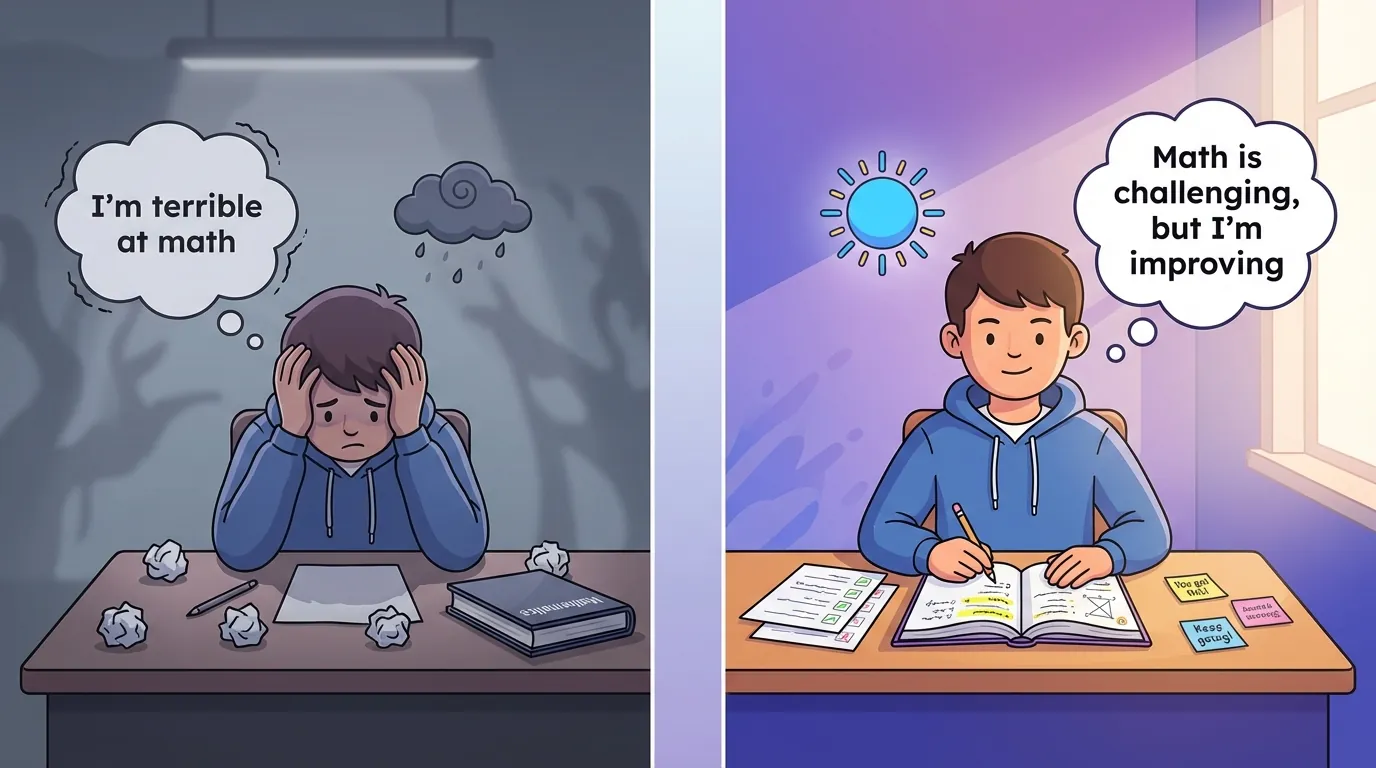
Your internal dialogue determines your external outcomes.
Tip #16: Practice Self-Compassion During Setbacks
Everyone faces setbacks and rough patches. You're not uniquely broken. Just human. Treating yourself with kindness during tough moments cuts stress dramatically. Self-compassion isn't about making excuses, it's about acknowledging reality without brutal judgment.
A meta-study on student motivation covering 79,000 students found that self-compassion strongly predicts academic persistence. When you mess up, acknowledge it and keep going. Beating yourself up wastes energy you could spend getting better.
Tip #17: Seek Teacher Autonomy Support
Surprising research: teacher autonomy support predicts student motivation better than parental support. A meta-study analyzing 144 studies and 79,000+ students found this was the number one factor.
What does autonomy support actually look like? Teachers who explain why material matters. Professors who offer choices in assignments. Instructors who acknowledge your perspective. Research from online learning research shows this matters even more in online environments. Find professors who support your autonomy. Ask questions like "How does this connect to real applications?" and "Can I approach this problem differently?" Resources at college student motivation and finding study motivation emphasize building these relationships. Students who feel supported by teachers stay motivated longer. Connect with instructors through office hours. Join communities like medical student insights or student tech resources for peer support.
Bonus Strategies for Online Learners
Use Music Strategically for Focus
Classical music, particularly piano, triggers specific attention networks in your brain. A 2007 study in Neuron journal found that music activates both ventral fronto-temporal networks for detecting important moments and dorsal fronto-parietal networks for maintaining attention.
Music isn't background noise. It's a cognitive tool.
Practice Reflection After Study Sessions
This metacognitive practice dramatically improves retention. Reflection transforms passive studying into active learning. You're not just consuming information, you're weaving it into your existing knowledge.
Connect With Supportive Study Groups
Online learning can feel isolating. Study groups provide emotional support, fresh perspectives, and accountability. Find peers who genuinely want to succeed and lift each other up.
Resources like education statistics and educational research show social learning combats isolation effectively.
For students consuming video content, YouTube video summarizer and AI chat for videos can help groups quickly extract and discuss key points from lectures without rewatching hours of content together.
Conclusion
Motivation isn't something you're born with. It's a skill you build over time.
Not all of these tips will click for you, and that's okay.
Pick two or three strategies that feel right. Test them out. Make changes as you go. Remember: if it's easy, it's not fun**. Every expert was once a beginner.
You can do it!
Share this

About AI Vid Summary Team
We're a passionate team dedicated to transforming how people learn from video content. At AI Vid Summary, we combine cutting-edge AI technology with user-friendly design to help students, professionals, and lifelong learners extract maximum value from YouTube videos and online courses.
Try AI Vid Summary


Loading comments...